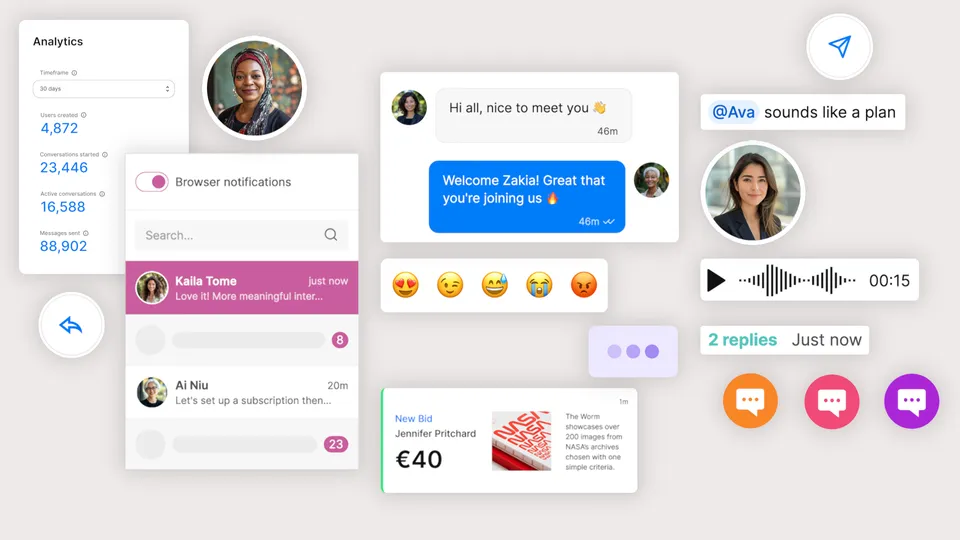
Real-time communication has become a cornerstone for modern applications, enabling features such as live chat, notifications, collaborative tools, and multiplayer gaming. Ably is a popular choice for developers building scalable, real-time experiences, but it might not suit every project's unique needs.
In this article, we’ll review what makes Ably a strong contender, explore its limitations, and present seven alternative solutions tailored for chat and in-app messaging use cases.
Contents
- What is Ably
- Key features of Ably
- Why Ably might be a good choice
- Why Ably might not be the best choice
- The 7 best alternatives you should consider
- The bottom line
What is Ably?
Ably is a real-time messaging platform designed to simplify the development of real-time, event-driven applications. It enables developers to build systems that require low-latency communication between devices, applications, and servers. Ably provides a robust, scalable infrastructure for managing real-time data streams, ensuring reliable message delivery and low latency, regardless of scale.
Ably use cases
Ably is designed for real-time, interactive applications. These include chat systems, collaborative document editing tools, live event streaming platforms, IoT device communication, and real-time analytics dashboards. Whether you're powering customer support chat in an app or enabling live updates for a sports event, Ably provides the infrastructure to make it possible.
Pricing
Ably uses a pay-as-you-go pricing model, making it scalable and adaptable for projects of different sizes. Costs are determined by usage metrics such as the number of messages sent, connections maintained, and bandwidth consumed, ensuring that you only pay for what you use.
Key features of Ably
Here are some of the key features of Ably:
- Real-time pub/sub messaging: Ably uses a publish/subscribe model, delivering data to 'channels' instantly. This is ideal for real-time features such as live notifications and chat.
- React UI Kit: Ably offers a UI Kit for building chat interfaces with React. The UI Kit works with the Ably Chat SDK and includes React hooks and providers.
- Presence tracking: Ably tracks users' online/offline status in real time, which is useful for chat apps, multiplayer games, and collaborative tools.
- Message history and replay: Messages are stored for a configurable time, allowing users to access missed messages when they reconnect.
- Guaranteed message delivery: Ably ensures message reliability with features such as exactly-once delivery and message order guarantees, even in complex environments.
- WebSockets and protocol agnostic: Ably uses WebSockets but also supports protocols such as HTTP/2, SSE, and MQTT for broad integration possibilities.
- Global edge network: Ably’s distributed edge network provides low-latency connections and automatic failover for high availability.
- Event-driven architecture: Ably supports event-driven workflows through webhooks, REST APIs, or serverless functions, enabling powerful automation.
- Interoperability: Ably bridges multiple protocols and services, allowing seamless connections between systems such as WebSockets and MQTT for IoT and web apps.
Why Ably might be a good choice
Ably excels in several scenarios where its robust architecture address critical real-time communication challenges. Here's why it might be the right fit for your application:
Enterprise-grade scalability
Ably is designed to scale with applications that require massive concurrency. It can handle millions of simultaneous connections and messages across the globe without noticeable latency. This makes it an excellent choice for high-traffic platforms such as collaborative tools, live sports streaming, and large-scale online gaming.
Global presence and reliability
With a global edge network and data centers across multiple regions, Ably ensures low-latency connections and high availability. The platform provides built-in multi-region failover mechanisms, reducing the risk of downtime or message delivery failure.
Supports diverse use cases
Whether you’re building live chat, collaborative editing tools, or IoT messaging systems, Ably’s wide array of features and global network make it a flexible solution for diverse industries, including healthcare, logistics, and fintech.
Flexible integration options
Ably is interoperable with existing systems, thanks to features such as:
- Webhooks and REST APIs for seamless integration.
- Support for protocols such as MQTT, WebSockets, and SSE, making it versatile for IoT, mobile apps, and web platforms.
Security and compliance
With end-to-end encryption, token-based authentication, and compliance with industry standards such as GDPR and ISO 27001, Ably is a trustworthy choice for applications that prioritize security and privacy.
Why Ably might not be the best choice
Despite its strengths, Ably may not be the best fit in certain situations. Here’s when you might want to explore alternatives:
High cost for smaller teams or startups
While Ably offers a pay-as-you-go pricing model, its costs can escalate rapidly with increased usage. Features such as message history, presence tracking, and message guarantees may require additional charges, which can strain the budgets of smaller teams or startups.
For projects with simpler requirements or limited budgets, alternatives with lower-cost tiers or open-source solutions such as Socket.IO might be better suited.
Overkill for chat use cases
Ably offers a wide range of features, such as message delivery guarantees and global networks, which are perfect for large, global, and complex apps. However, if you're building something not as complex these advanced features might be unnecessary.
For most chat and in-app messaging use cases, Ably could add more complexity than needed. It requires more setup and management, and you’d be paying for features you don’t use. For chat-specific applications, a more focused platform built specifically for chat apps such as Sendbird or TalkJS may offer more specialized capabilities, and would likely be easier to integrate and manage, saving both time and costs.
Steep learning curve
Ably’s extensive APIs and feature set, while powerful, may introduce a steeper learning curve for developers who are not familiar with real-time systems. For teams with limited experience in managing WebSockets or distributed systems, platforms with pre-built chat components might be much easier to implement.
Self-hosting not an option
Ably is a managed service, which means it’s not ideal for organizations that require complete control over their infrastructure. If you need on-premises deployment for security or compliance reasons, self-hosted solution such as Socket.IO may be a better choice.
By carefully evaluating your project’s specific needs, team expertise, and budget, you can determine whether Ably is the right fit or if one of its alternatives would serve you better.
The 7 best alternatives to consider
| Platform | Best for | Hosting model | Pricing entry point | Free tier | Key drawback |
|---|---|---|---|---|---|
| TalkJS | In-app chat with minimal dev effort | Fully managed | $279/month | Dev only | Chat-only focus |
| PubNub | Real-time & IoT messaging | Fully managed | $98/month | Limited | No ready-made UIs |
| Sendbird | Large-scale customer support | Fully managed | $399/month | Yes (limited) | Expensive at scale |
| Pusher | Real-time features & notifications | Fully managed | $49/month | Yes | Features split across products |
| Stream | Social & activity-driven chat | Fully managed | $399/month | Yes | High scaling costs |
| Socket.IO | Custom real-time apps | Self-hosted | Free | Yes | High dev effort |
| Firebase | Real-time data-driven apps | Fully managed | Pay-as-you-go | Yes | Chat features require custom work |
TalkJS
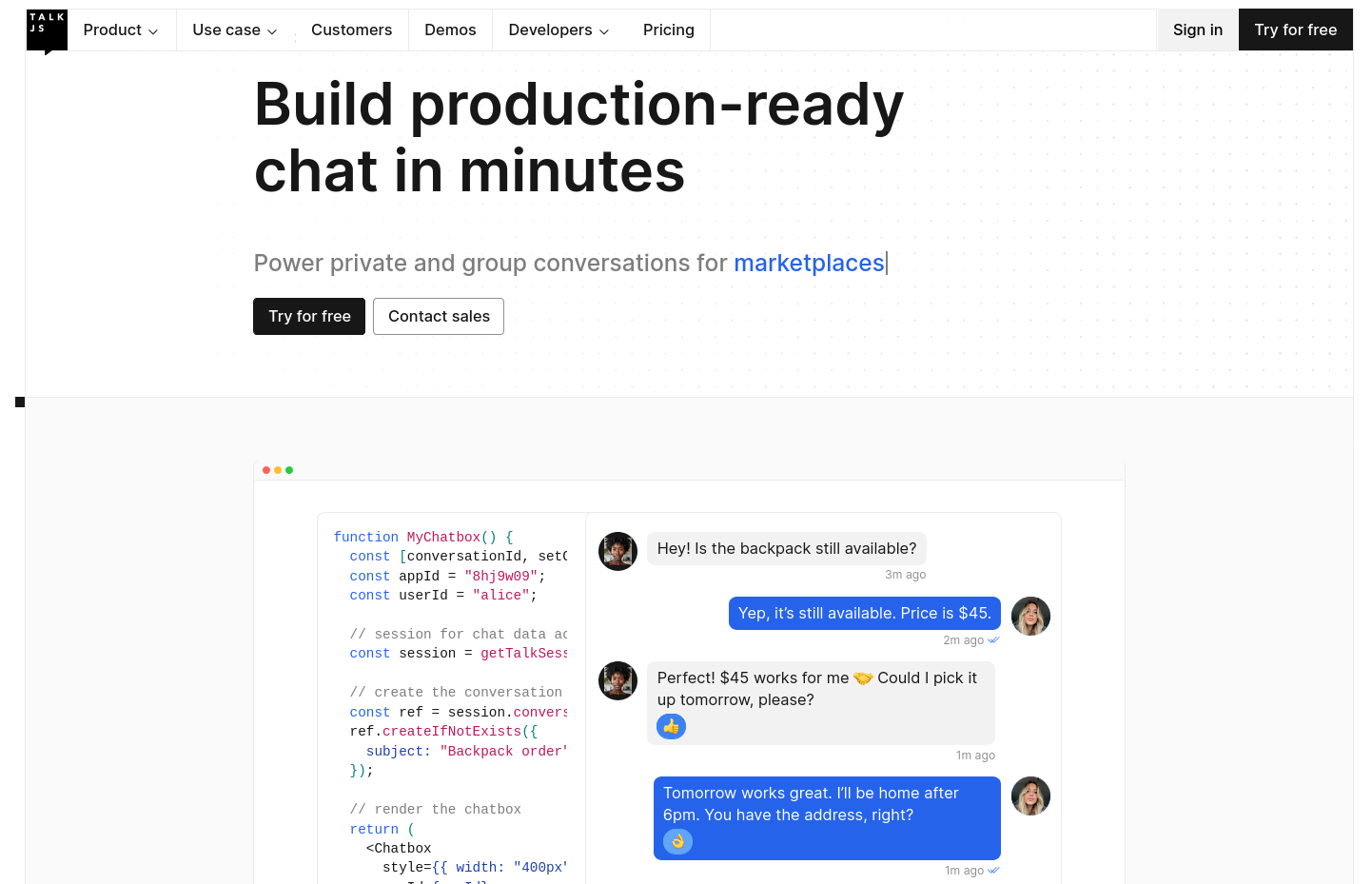
TalkJS provides developers with a prebuilt, fully customizable solution for adding chat messaging features to applications. Unlike other platforms that focus solely on real-time messaging, TalkJS specializes in enabling rich, customizable chat experiences with a focus on user interfaces and experience. It includes pre-built UI components that can be directly integrated into web and mobile apps.
Pricing
TalkJS offers a free environment for development and testing. You have to start paying when you go live. Paid plans start at $279 per month for the Basic plan, which includes up to 10,000 monthly active users (MAU), and scale up to custom pricing for enterprise-level usage, with added features such as performance guarantees and dedicated support.
Pros
- Easy to integrate and customize.
- Highly flexible UI components designed for chat apps and in-app messaging.
- Built-in moderation tools for content control.
- Provides extensive real-time messaging features, including rich media support, file sharing, message search, replies, emojis, presence, and notifications.
- Secure, and scalable infrastructure that supports millions of global users.
Cons
- Less suited for non-chat purposes, such as collaborative editing or IoT messaging systems.
- Free only for development and testing purposes, production use requires a paid plan.
PubNub
Pubnub is a comprehensive real-time messaging platform designed for creating chat, notifications, and collaborative applications. Pubnub offers APIs for both messaging and data streaming, with features that include presence tracking, data synchronization, and push notifications, which are ideal for IoT and mobile applications.
Pricing
Pubnub offers a very limited free plan that works best for testing or developing a proof of concept. Paid plans start at $98 a month for the 'Starter' plan, which includes 1,000 MAU. Events and actions incur additional cost though, which is not stated on the pricing page. It’s best to contact their sales to get a proper estimate.
Pros
- Global infrastructure with low-latency connections.
- Provides extensive real-time messaging features, including presence, notifications, and data sync.
- Scalable platform that supports millions of devices.
- Good support for mobile and IoT applications.
Cons
- Pricing can get expensive for large-scale applications, especially as message volume grows.
- Some developers may find the platform too complex for simpler applications.
- Can be difficult to integrate for developers new to real-time messaging platforms.
- No ready-made UIs for chat and in-app messaging
Sendbird
Sendbird is a leading messaging platform focused on enabling chat features in applications. It provides a rich set of APIs and SDKs to build customized chat experiences with support for real-time messaging, push notifications, media sharing, and more. Sendbird is a popular choice for enterprise-level applications, particularly in customer support and team collaboration tools.
Pricing
Sendbird offers a free tier for up to 1,000 monthly active users and 20 concurrent connections, making it useful for testing. Paid plans start at $399/month for the 'Starter' plan, which supports up to 5000 monthly active users and includes features such as message history, real-time push notifications, and file sharing. Custom enterprise pricing is available for large-scale use cases.
Pros
- High customization options for chat features.
- Scalable for large applications, making it ideal for enterprise use.
- Includes rich features such as media support, message search, and push notifications.
Cons
- Pricing can be a barrier for smaller businesses or startups.
- Additional concurrent connections are priced at 1$ per connection.
- Message retention only six months.
- Some features may require additional setup and maintenance.
Pusher
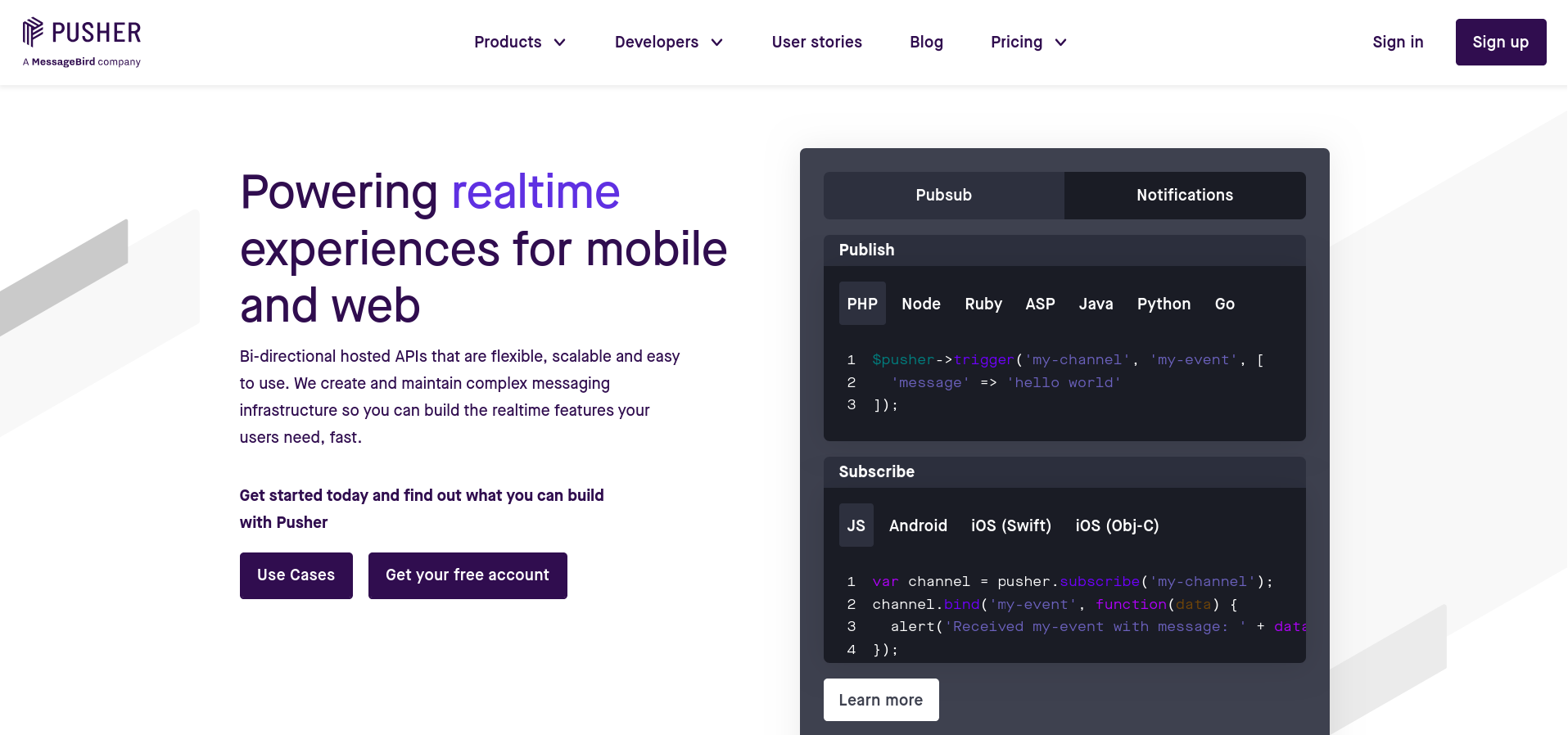
Pusher is another popular real-time messaging platform used for building interactive, live features into applications. It offers a variety of tools for adding live chat, notifications, and collaborative elements. Pusher is known for its ease of integration with other services and platforms.
Pricing
Pusher provides a free 'Sandbox' plan with up to 200 concurrent connections per month and 200,000 messages per day. Paid plans start at $49 per month for up to 500 concurrent connections and scale to custom pricing for larger implementations.
Pros
- Easy to integrate with other tools and services.
- Provides robust real-time messaging capabilities with low-latency performance.
- Flexible pricing and scalable solutions.
Cons
- The 'Channels' (realtime) and 'Beams' (notifications) are priced separately.
- Advanced features such as message history, presence tracking, and analytics are available only on higher-tier plans.
- Limited support for media-rich messaging (such as images, videos) compared to other platforms.
- May require additional setup for more complex use cases.
- No ready-made UIs for chat and in-app messaging
Stream
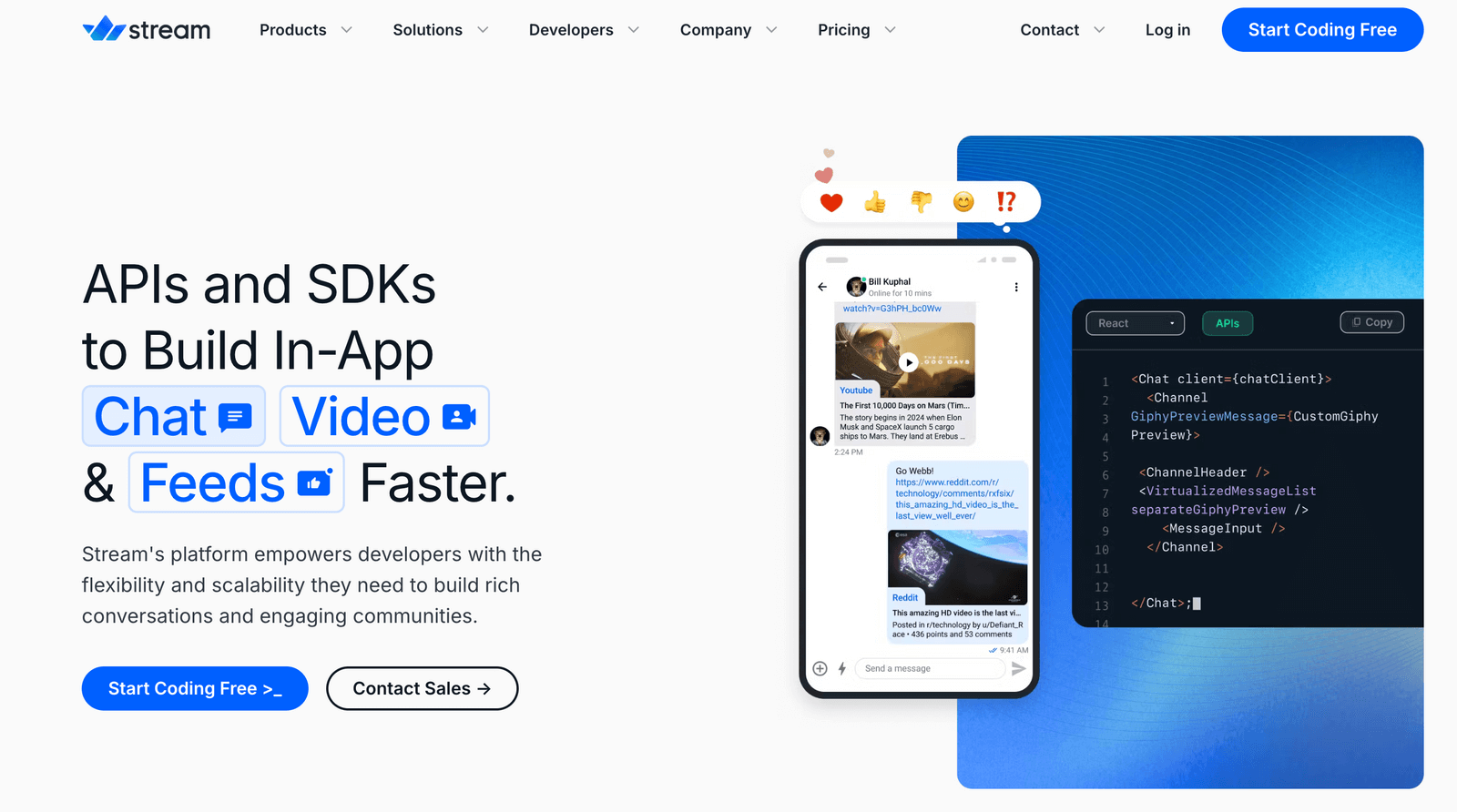
Stream provides a suite of APIs for building scalable, feature-rich chat applications. Its platform is designed for developers who need chat and activity feeds. It supports features such as message threading, reactions, mentions, and attachments, making it a great fit for social apps.
Pricing
Stream offers a free tier for up to 100 concurrent connections and 1,000 monthly active users. Paid plans start at $399/month, which includes up to 10,000 monthly active users and premium features such as message history and push notifications. Custom pricing is available for larger-scale applications.
Pros
- Highly customizable with rich features such as message threading and activity feeds.
- Scalable to support large applications.
- Advanced moderation tools for content control.
- Global edge network
Cons
- Limited free plan may not suffice for larger apps.
- More expensive than some alternatives for smaller projects and startups.
- Scaling your user base might incur very high prices ($0.99 per additional concurrent connection)
- Some features may require advanced setup or custom development.
Socket.IO
Socket.IO is an open-source JavaScript library for real-time web applications. It provides an easy way to implement WebSockets-based messaging for chat applications, real-time collaboration tools, and live notifications. As a widely used solution, Socket.IO integrates well with Node.js environments.
Pricing
Socket.IO is free to use for open-source projects. For enterprise use, additional features such as premium support, additional hosting options, and scaling services are available, with custom pricing upon request.
Pros
- Free and open-source with no licensing fees.
- Well-suited for web-based applications, especially those using Node.js.
- Highly flexible and customizable for developers familiar with real-time communication.
- Active open-source community with plenty of resources.
Cons
- Requires more development effort compared to managed services.
- Doesn’t offer out-of-the-box features such as message storage or advanced user presence, so these must be handled separately.
- Not as feature-rich as some paid alternatives, requiring developers to build certain functionalities themselves.
Firebase (with Cloud Firestore)
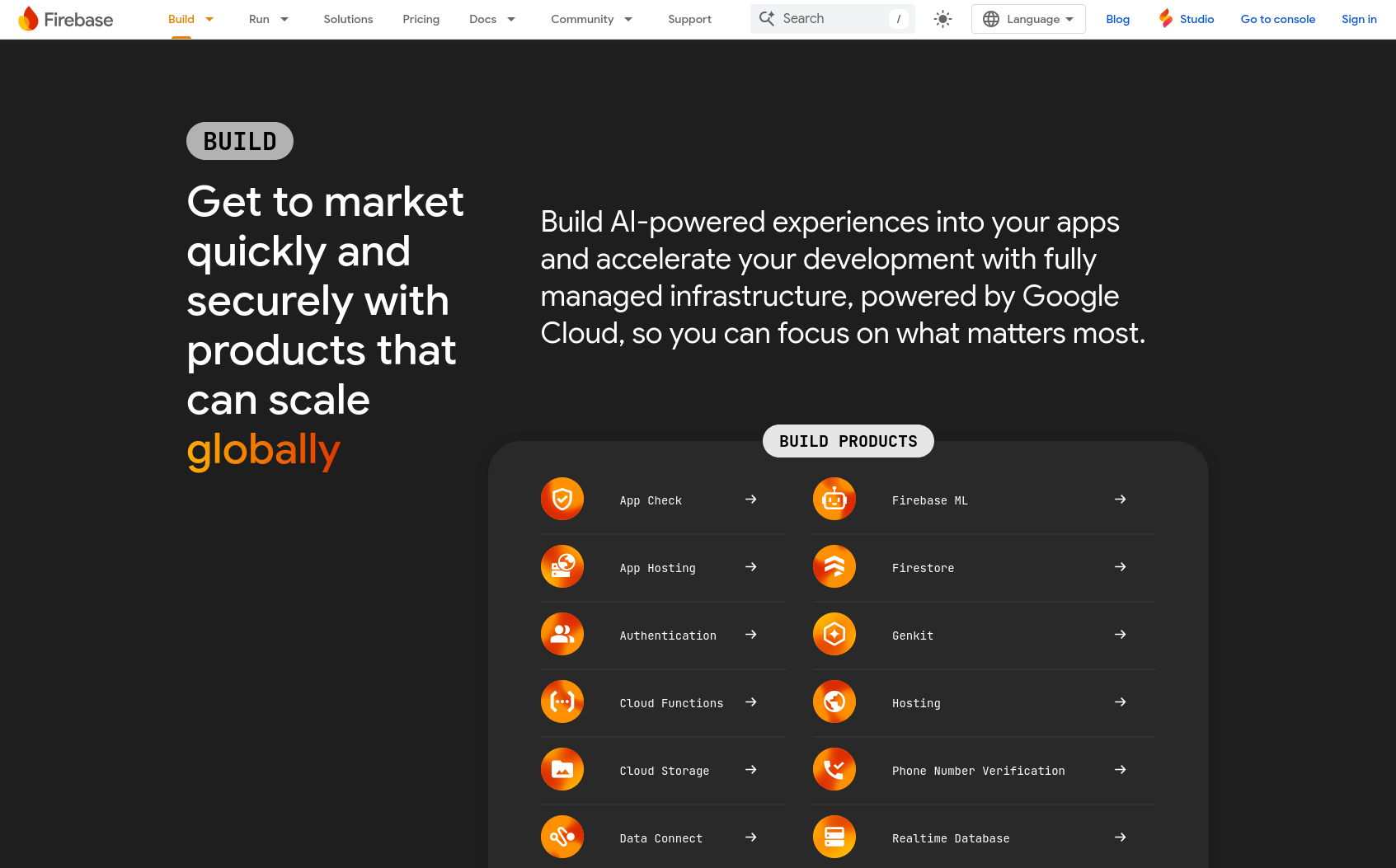
Cloud Firestore, part of Google's Firebase platform, offers a NoSQL database optimized for real-time synchronization. While not purely chat-focused, it's widely used to implement real-time messaging due to its flexibility and integration with Firebase’s ecosystem.
Pricing
Firebase uses pay-as-you-go pricing. The free 'Spark' starter plan includes, among other things, 50,000 daily document reads, 20,000 daily document writes, and 1 GB of total storage.
Pros
- Automatically updates data in real-time across devices.
- Straightforward setup and integration with Firebase SDKs.
- Supports both small-scale apps and global deployments.
- Integrates with Firebase Authentication, Cloud Functions, and Firebase Hosting for end-to-end app development.
Cons
- Limited out-of-the-box chat features; requires custom development for features such as typing indicators or moderation.
- Pricing can increase with high read/write operations.
- Has a learning curve, designing an efficient schema for chat use cases may take extra effort.
The bottom line
These alternatives to Ably cater to various needs depending on the scale, complexity, and specific features you're looking for in a real-time messaging platform. Whether you are building a simple chat app or a large-scale enterprise solution, you can find a platform that fits your use case. Consider your app's requirements and budget when choosing the best solution for your project.